
The medical device industry is undergoing a massive transformation. Walk through any modern production facility, and you will notice a distinct shift in how high-value, single-use products are being handled. Devices like complex surgical kits, pre-filled syringes, nasal delivery systems, ato-injectors, and GLP-1 pens require the absolute highest level of protection, sterility, and assembly precision.
To meet these demands, medical device manufacturers are increasingly moving away from traditional, soft pouch packaging and adopting automated blister packaging lines. This transition is not merely about aesthetic appeal; it is a strategic migration driven by market growth, the rise of highly sophisticated combination products, and the need for rigorous physical protection.
As a leading blister equipment supplier to the medical industry, Pharmaworks has observed a significant surge in complex medical device packaging projects. This comprehensive guide explores why this structural shift is happening, how automated blister packaging solves the unique material handling challenges of the medical sector, and how manufacturers can seamlessly scale their operations from initial clinical trials up to full-scale automated production.
What is Driving the Surge in Medical Blister Packaging?
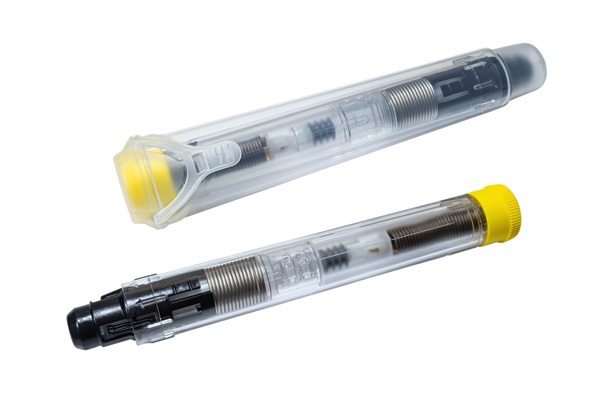
The rapid expansion of the medical device sector is the foundational catalyst for this packaging shift. The industry is witnessing a massive influx of novel devices that simply did not exist at scale a decade ago. The unprecedented production volumes of GLP-1 injection pens and complex nasal inhaler type products are perfect examples of this growth.
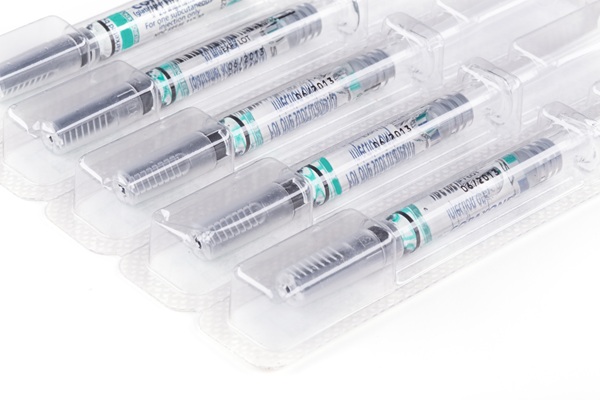
When a manufacturer introduces a high-value, complex device to the market, traditional soft pouches often fall short. Medical devices are uniquely characterized by their single-use nature and intricate geometry. They frequently feature delicate components, plungers, needle shields, or electronic activation buttons.
If these devices are packed in a flexible, soft pouch, they are highly susceptible to shifting, bending, or being crushed during transport and distribution. A rigid thermoformed blister provides a structured, form-fitting pocket that immobilizes the device, ensuring it arrives in the hands of the clinician exactly as it left the manufacturing floor.
Why is Rigid Blister Packaging Superior to Soft Pouches for High-Value Devices?
The primary reason manufacturers are choosing blisters over soft packs comes down to a critical structural advantage: rigidity. Many modern medical devices and combination drug-delivery systems are incredibly expensive to develop and produce. Consequently, manufacturers must implement every available safeguard to eliminate product damage and waste.
The structural integrity of a thermoformed blister package serves several vital functions:
- Prevention of Accidental Activation: Devices like pre-filled syringes, nasal delivery systems, and autoinjectors are engineered to activate with specific physical pressure. In a soft pouch, external compression during shipping or handling can accidentally trigger the device. If a syringe or nasal inhaler activates prematurely inside a soft pack, the medication is discharged, the sterile barrier is compromised, and an incredibly expensive product is ruined. The rigid structure of a blister pocket acts as a protective shield, absorbing external pressure and preventing premature activation.
- Enhanced Physical Protection: Fragile plastic components, glass barrels, and delicate surgical instruments are shielded from impact. The custom-formed cavity restricts movement, stopping parts from colliding with one another inside the kit.
- Tamper Evidence and Security: Blister packs provide clear, visual evidence of the package’s integrity. If the backing material or the plastic shell is punctured or torn, it is instantly recognizable to medical staff, ensuring compromised products never reach a patient.
How Does Thermoformed Blister Packaging Support Sterile Barriers and Compliance?
Maintaining an absolute sterile barrier is a non-negotiable requirement in medical device manufacturing, particularly within the surgical realm. The materials and structural flexibility of automated blister machines play a crucial role in achieving and validating this sterility.
Automated blister lines can run a diverse range of material structures, including traditional plastic thermoforming films, heavy-duty cold-form foils for total light and moisture barriers, and specialized porous lidding materials like Tyvek®.
For surgical kits that require post-packaging sterilization, the blister format is uniquely advantageous. The machine can form a rigid tray, place the surgical components inside, and seal it with a Tyvek® lidding material. This configuration features precise web designs where sterilizing gas (such as Ethylene Oxide, or EtO) can safely enter the blister cavity to sterilize the contents. Once the sterilization cycle is complete, these blisters can be secondarily sealed off, trapping the sterile environment inside a highly durable, rigid enclosure that withstands rigorous logistical handling.
The Core Challenge: Handling the Complexity of Kitting and Feeding
Unlike oral solid dose (OSD) applications—where standard tablets and capsules can be fed into blister cavities via uniform, high-speed flood feeders—medical devices present extreme material handling challenges. Every medical device features a slightly different shape, center of gravity, and orientation requirement.
Kitting introduces even more complexity. A single surgical kit blister might require the precise placement of a syringe, a vial, a needle, and an alcohol prep pad, all within a single package. Furthermore, regulatory compliance dictated by the medical industry mandates that there can never be a missing or duplicate item within a kit.
To overcome this hurdle, the feeding system must be just as advanced as the thermal former itself. This is where the power of custom automation, robotics, and integrated quality control systems becomes indispensable.
Breaking Down the Automated Production Line
Managing this complexity requires a highly synchronized, sequential system. The chart below illustrates the typical progression of a modern, fully integrated automated blister packaging line, moving from the raw materials to the final shipping-ready container:
[Raw Film Supply] ➔ [Intermittent Thermoformer] ➔ [Robotic Feeders & Kitting] ➔ [Vision & Quality Checks] ➔ [Lidding & Sealing] ➔ [Cartoning & Case Packing]
This line operates as a seamless ecosystem. Material handling systems extract individual components out of pre-configured kits or bulk trays, using precision robotics to carefully orient and deposit them into the deep-drawn cavities. Immediately following the loading zone, high-resolution vision inspection systems perform meticulous quality checks to confirm correct placement, precise orientation, and exact or damaged component counts before the lidding material is hermetically sealed to the web.
Balancing Speed and Precision: The Power of Intermittent Motion and Deep Draw Depths
In the OSD pharmaceutical world, rotary, continuous-motion blister machines dominate because they excel at running high-volume, shallow-cavity tablet blisters at maximum speeds. However, for medical device packaging, rotary systems often hit a physical wall.
Medical packaging typically requires a much deeper draw depth to accommodate the physical three-dimensional profile of syringes and kits. Continuous motion can make it incredibly difficult to achieve clean, uniform material distribution in deep cavities. Additionally, trying to feed complex, irregular devices into a web that never stops moving creates an unnecessarily high risk of mechanical jams and misaligned placements.
For these reasons, intermittent-motion technology is perfectly suited for the medical device sector. Intermittent machinery advances the web in precise increments, pausing the film completely at key stations.
During these brief, controlled pauses, the machine can flawlessly execute critical operations:
- Deep-Draw Forming: The film stops completely over the forming tooling, allowing for flawless material distribution. Pharmaworks has invested heavily in expanding the capabilities of its machinery line to achieve standard draw depths of 25 millimeters, with robust options to reach deep draws of up to 40 millimeters. This accommodates large-profile syringes, nasal spray barrels, and thick surgical tools.
- Rigorous Quality Inspections: Vision systems can scan a completely stationary product, eliminating motion blur and ensuring 100% accurate validation of package contents.
How Can Manufacturers Scale Blister Operations on a Budget?
A primary concern for medical device manufacturers looking to move into automated blistering is the perceived upfront cost and the risk of outgrowing an investment. Fortunately, modern blistering platforms are engineered with modular scalability in mind. This allows a company to align its capital expenditures directly with market demand, scaling both the physical machinery format and the level of auxiliary line automation over time.
| Machine Model | Maximum Draw Depth | Core Operational Profile & Scaling Target |
| Pharmaworks TF1e | 25 mm to 40 mm | Ideal for low-to-medium volumes, clinical trials, or initial product launches. Often starts with manual hand-loading configurations. |
| Pharmaworks TF2 | 40 mm (Standard) | Medium-to-high volume format. Transitions operations into full robotic feeding, integrated material handling, and custom automation. |
| Pharmaworks TF3 | 40 mm (Standard) | Large-format production. Tailored for maximum output per hour, full inline integration with downstream cartoners, case packers, and palletizers. |
This structural scalability provides an excellent runway for growing companies. A manufacturer can start by purchasing a compact thermal former like the TF1e to handle clinical trials or a new product launch, utilizing operators to hand-place syringes or kits into the formed cavities. As the product gains strong market traction and sales volumes expand, the manufacturer does not need to scrap the system. Instead, they can scale their budget and capabilities progressively.
They can seamlessly integrate automated robotic feeding systems to eliminate manual labor, add sophisticated material handling to manage complex package-in-package configurations, and ultimately connect a downstream cartoner. This modular progression transforms a standalone thermoformer into a fully integrated, automatic production line, maximizing labor savings and output while future-proofing the initial capital investment.
Summary: A Strategic Shift for Patient Safety
The migration of medical device manufacturers toward automated blister packaging is a definitive trend rooted in product security, compliance, and operational efficiency. By swapping soft pouches for rigid blisters, manufacturers protect high-value, expensive devices from accidental activation and structural damage.
Partnering with an experienced integrator like Pharmaworks allows manufacturers to leverage intermittent motion technology and deep-draw capabilities, ensuring that even the most complex kitting challenges are solved with precision, scalability, and complete peace of mind.